Freedom: your birthright
Don't forget it
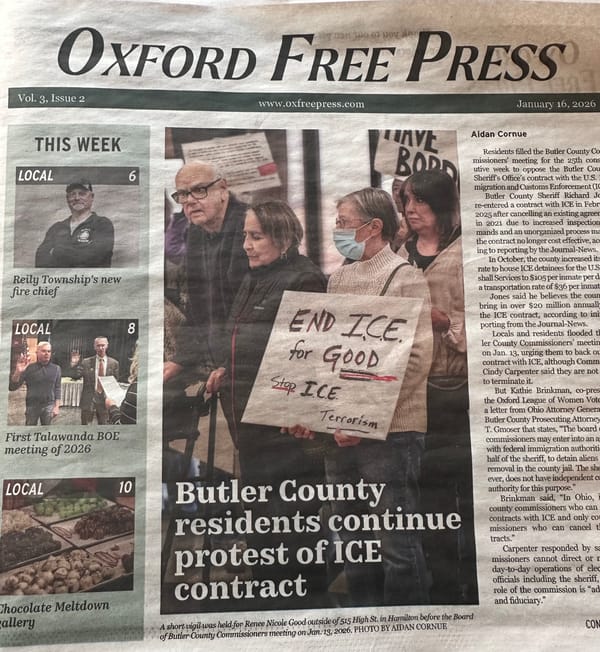
I have a PhD in political science with a specialty in comparative politics and religion and politics. Comparative politics as a field is first of all concerned with the classification of regimes. You could say evaluating whether a country is a democracy or not is part of my full-time job, and has been for many years. I have written here and elsewhere that I believe our country has already crossed the line from democracy into what scholars call competitive authoritarianism (see my previous post), a type of regime where elections exist but they are not free and fair. The party in power uses its access to the levers of power to skew the playing field, to strengthen their own position vis-a-vis the opposition.
Many observers are sounding the alarm that our upcoming Midterm elections will not be free and fair. This is a fact. The interesting thing is that Democrats may still win some elections, even with a skewed playing field (that is what makes a country competitive authoritarian as opposed to pure authoritarian - once the opposition has no chance of victory in any of the following arenas - electoral, legislative, judicial, and media, then you live in a pure authoritarian regime, but if the opposition has a chance, then your country is still considered "competitive").
In a recent article, the Russian American journalist M. Gessen, who lived through Russia's transition from democracy to authoritarianism, described it this way:
"Ask any people who have lived in a country that became an autocracy, and they will tell you some version of a story about walls closing in on them, about space getting smaller and smaller. The space they are talking about is freedom."
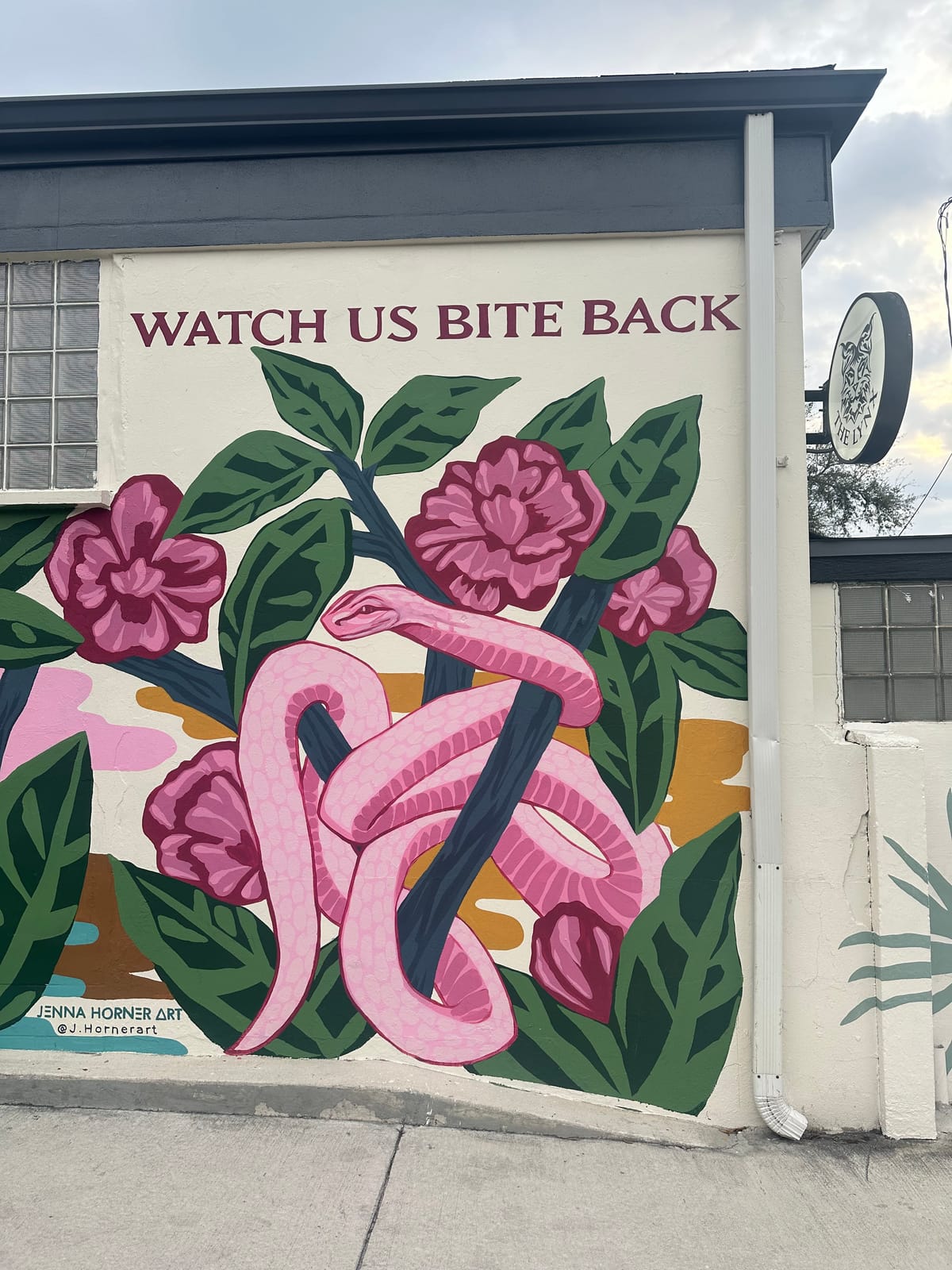
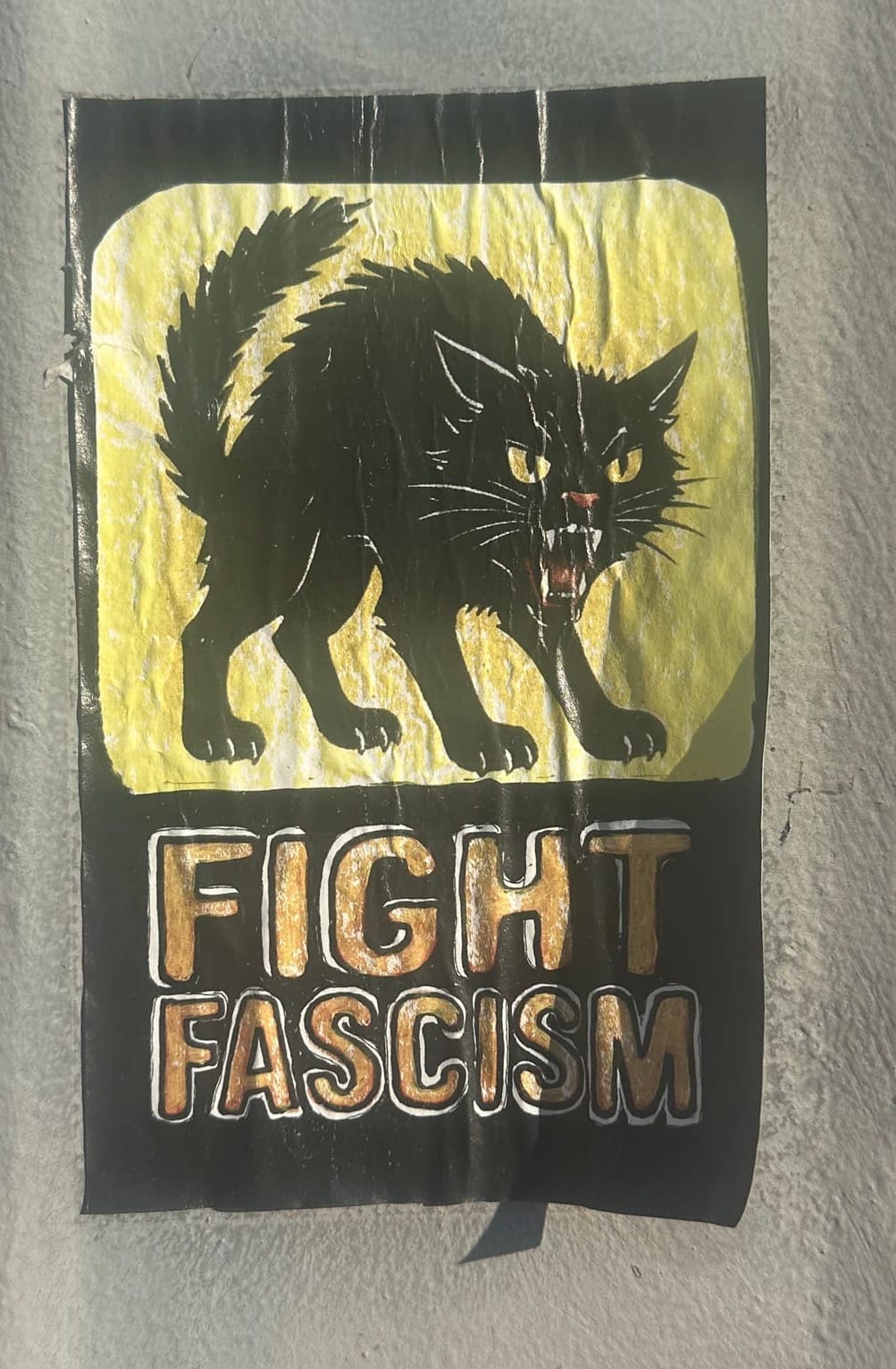
A time will come when we will not be able to post what we think on social media. We will delete our feeds, erase our blogs. The time is coming when we will talk with our eyebrows, but not with our words. We will not organize (publicly). We will not stop on the street to take pictures of protest graffiti:
Gessen has advice for us as our freedom constricts. They write, "The only way to keep the space from imploding is to fill it, to prop up the walls: to claim all the room there still is for speaking, writing, publishing, protesting, voting. It’s what the people of Minnesota appear to be doing, and it’s something each of us needs to do — right now, while we still can."
The point is that we need to live the entire breadth of our freedom while we still can. Disagree with people who spout ignorance and misinformation. Go to protests. Read what you want. Leave your oppositional literature on the bookshelf. The time is coming when you will do none of those things.
But even then, dear reader, you will still be free.
I've written elsewhere that I believe true freedom is internal. Many people live in democracies but they are slaves to capitalism, to their addictions, to their own stagnation. And many people are free in autocracies.
You can be too.
The political system under which you live is only one form of freedom. There are many others, and as one constricts, you can find other forms of freedom: You can forgive yourself for past wrongs. You can forgive others who have harmed you, maybe those who voted in a dictator in your country. You can pray for anyone at any time. You can send your love energetically to anyone across time and space. You can notice beauty, even when it is rarely found. You can laugh.
Elizabeth Tsurkov, a PhD student, (with a specialty in comparative politics, I might add), was kidnapped in Iraq and held hostage by a militia for more than 900 days. During that time she endured unimaginable torture. And yet, she found that she still had a sense of humor. See this article she wrote after her release where she describes "being kidnapped by idiots." She also had a truly incredible conversation with Benjamin Wittes on Lawfare recently that I highly recommend. In the conversation she describes her parents' resistance to authoritarianism in Russia, and how her family history of dissent supported her during her captivity:
My former father-in-law, a scholar of Soviet politics, used to get enraged when people used the term totalitarianism to describe Soviet Russia. The regime never has total control, he would say. I find myself thinking about this now, as our freedoms narrow. No matter how much the walls close in, I am still free. Freedom is my brithright. I claim it. Even in the gulag, I will claim it.
This morning my yoga teacher encouraged us all to focus on Sadhana (साधना), the Sankrit word for daily practice. She suggested we commit to a rhythm when we wake up, and a rhythm when we are getting ready to go to sleep, a daily practice to live by. I was delighted by the suggestion - I still have the freedom to decide what I do when I wake up, what I will do when I go to sleep. I know that freedom may not last. But I have it right now, and I will enjoy it while I still can.
Freedom is your birth right, dear reader. And whether you live in a democracy or not, live the full breadth of your freedom.
The poet David Whyte jokes that the German poet Rilke "is always there before you." And in this poem, it feels to me like he gave words to the moment we are now living. Click here to let Rilke translator Joanna Macy (RIP) read it to you, in her spectacular voice. Note how we can use our breath to create space in times of constriction.
Let This Darkness Be a Bell Tower
Rainer Maria Rilke
Quiet friend who has come so far,
feel how your breathing makes more space around you.
Let this darkness be a bell tower
and you the bell. As you ring,
what batters you becomes your strength.
Move back and forth into the change.
What is it like, such intensity of pain?
If the drink is bitter, turn yourself to wine.
In this uncontainable night,
be the mystery at the crossroads of your senses,
the meaning discovered there.
And if the world has ceased to hear you,
say to the silent earth: I flow.
To the rushing water, speak: I am.
Sonnets to Orpheus II, 29