Sunday Soul: Clarifying the vision
What world do you want to create?
What world do you want to create?
I've been rereading Rosa Brooks' How Everything Became War and the Military Became Everything: Tales from the Pentagon. Brooks is a lawyer at Georgetown but she had a stint working at the Pentagon for Michele Flournoy who served as the Under Secretary of Defense for Policy under President Obama. Brooks was raised by peace activists, but through an unexpected turn of events, was at the Pentagon for a few key years of the War on Terror (2009-2011).
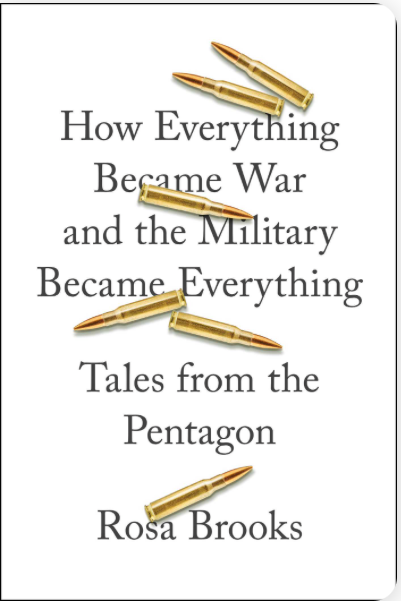
I've been reading the book for a book project I'm working on about how the Trump administration relies on War on Terror legal precedent, concepts, and policies to achieve its expansion of the executive branch, a subject which Brooks anticipated with stunning alacrity nearly a decade before he took office. Brooks writes about her concerns about how the War on Terror is breaking down the distinction between war and peace and predicts its attendant consequences for democracy.
She wrote:
"As 'war rules' trickle down into ordinary life, they are beginning to change everything from policing and immigration policy to courtroom evidentiary rules and governmental commitments to transparency, gradually eroding the foundations of democracy and individual rights."
Well she got that right.
I had been reading the book the week that we learned of the US' raid on Maduro. (It goes without saying that I did not get my Christmas wish). The rest of the day I kept taking refuge in Brooks’ book, turning to chapters that discuss the limits on violence, and American hubris. I wanted someone to talk sense when the situation did not make sense.
I ended up reading some of the later chapters with Brooks’ recommendations for how to end our forever war. And I struck gold. The conclusion asserted that people often get caught up in asking lawyers what’s legal (as we see 24/7 under the current administration). They forget that laws are just the rules that we have made, and they can be remade. Brooks encourages her reader to shift their attention from asking what’s legal, to envisioning the future that they want, and then taking steps to create it. She writes, "We should be asking a far more urgent question: What kind of world do we want to live in-and how do we get from here to there?" I like that the quote occurs on page 365, as if to suggest that it is a practice that we should engage in every day.
So I'll leave you with that, on this Sunday. What kind of a world do YOU want to live in? And how do we get there from here?